Integration capabilities
Prebuilt integrations for your ESG data
Easily connect your entire tech stack, including ERPs, HR, finance, emissions tools, and more, so all your sustainability data flows automatically.
- Broad connector library
- Eliminate silos
- Reduce manual work
- Accelerate business operations
- Push data directly from your data lake

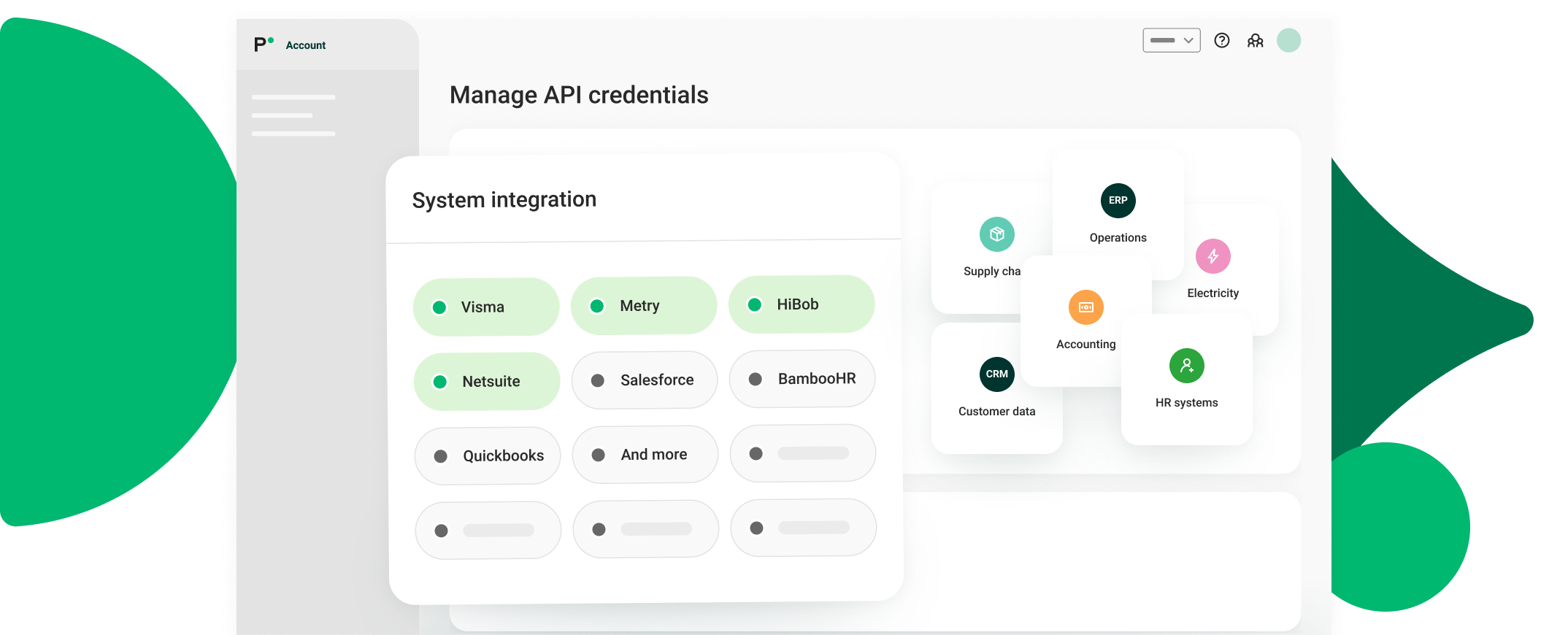
Made to easily plug into your stack

Work faster, not harder
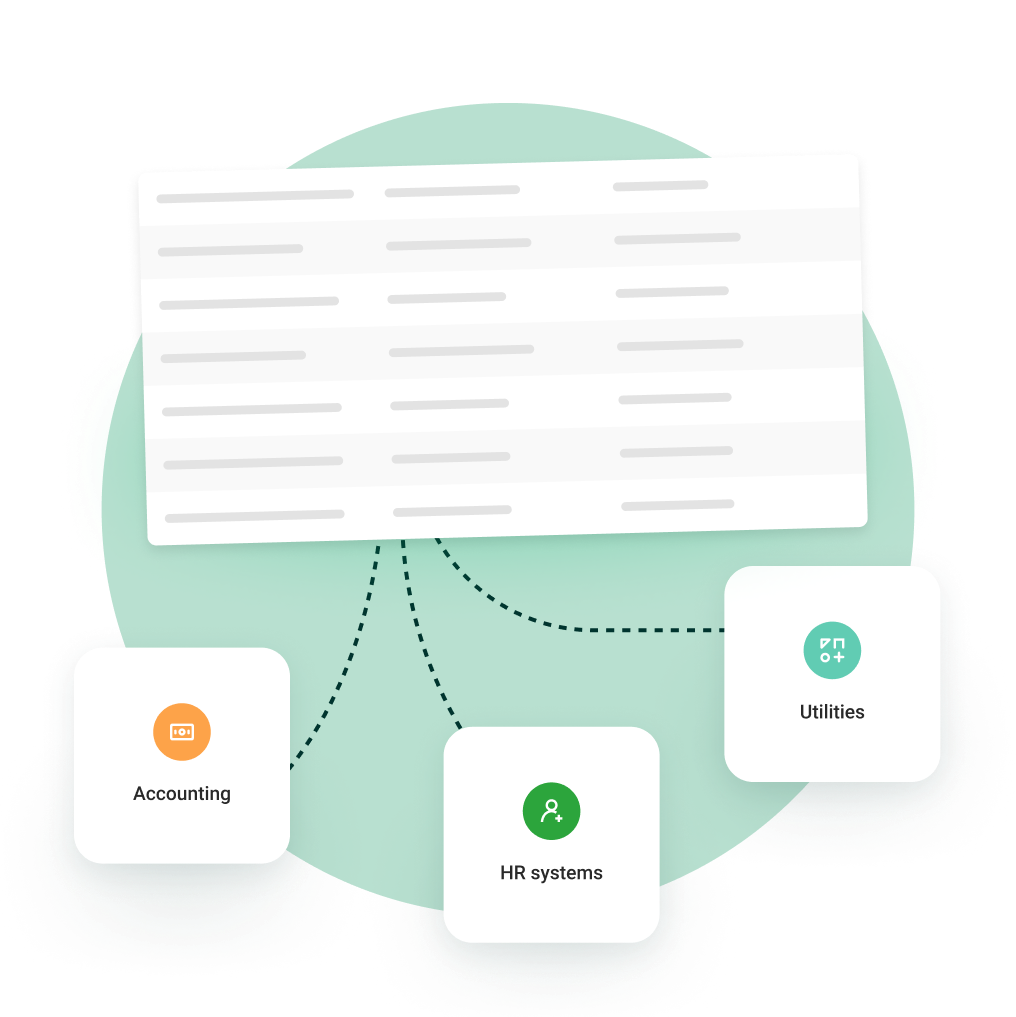
Speed up business operations with real-time data flow between your ESG platform and all your other systems. Integrations eliminate repetitive tasks like data entry, invoice syncing, and CRM updates–saving you time and reducing errors.
- Cut reporting time with synced systems and fewer erros
- Automate workflows across your sustainability stack
- Connect directly to your existing data lake with Position Green’s API

One ESG platform, one source of truth
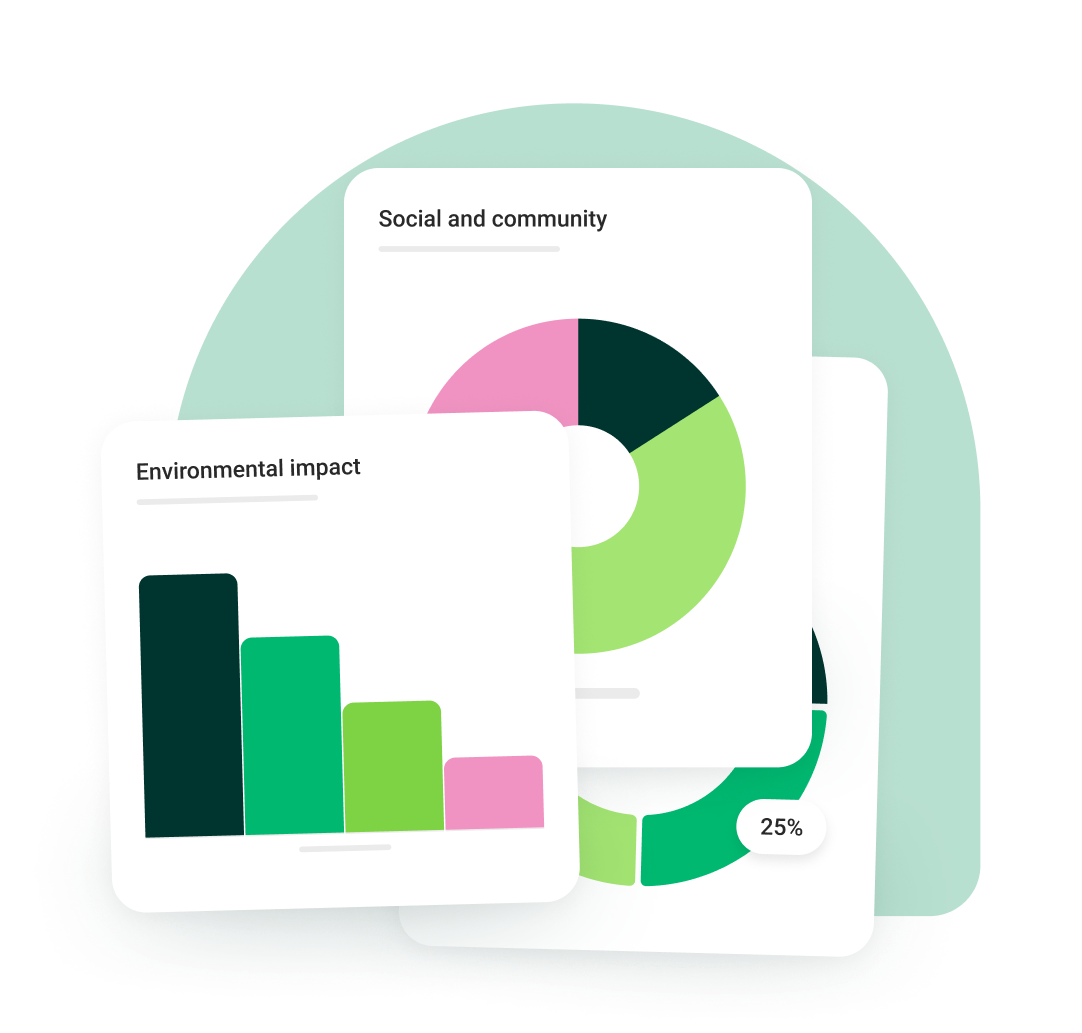
When your systems talk to each other, your data works harder. Integrations break down silos, giving you a clear view across teams from procurement to project management and everything in between.
- Connect ESG data across key systems
- See emissions, risk, and performance together
- Unify insights across sales and retention

Scale your impact
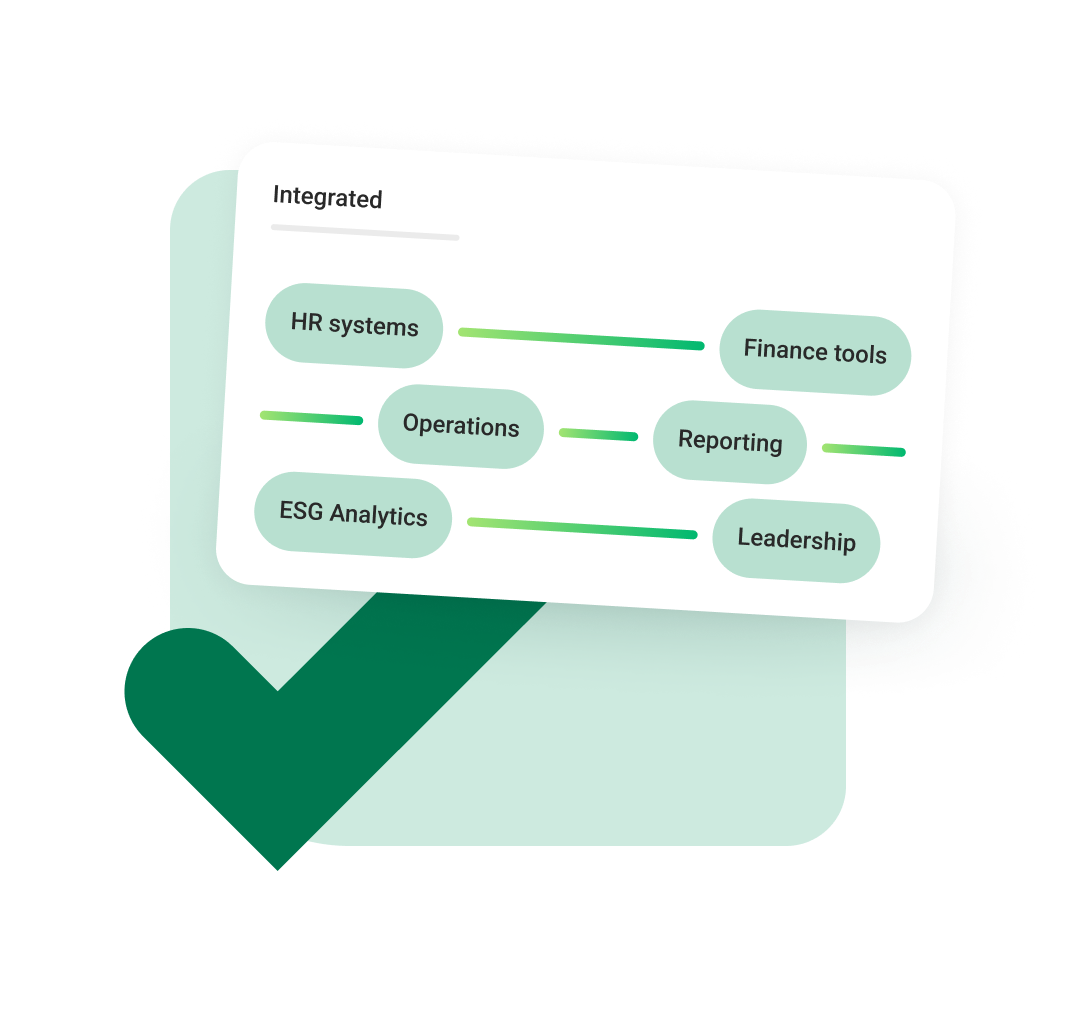
Integrations eliminate hurdles and enable faster decisions. With connected systems, teams can act on insights instantly and stay ahead of change.
- Remove bottlenecks as you scale
- Facilitate collaboration across the organization
- Spark better strategic decision making
Integrations at a glance
Absolutely. Our ESG platform is designed to integrate seamlessly with your existing systems — including ERP, HR, and finance tools. Whether it’s connecting to your accounting software, emissions data, or people systems, we support flexible integrations to fit your workflow.
We offer both APIs and out-of-the-box integrations. Our APIs allow you to automatically push data to and from Position Green, enabling smooth data flows across your systems. We also have a dedicated integration team to support your setup and ensure everything works the way you need.
Integration improves data quality by ensuring you’re working with accurate, up-to-date information directly from your source systems — reducing the risk of human error, version control issues, or inconsistent inputs. It also eliminates manual data entry and duplication, saving time and allowing your team to focus on analysis and decision-making rather than chasing down spreadsheets. The result is a more reliable, efficient, and scalable reporting process.
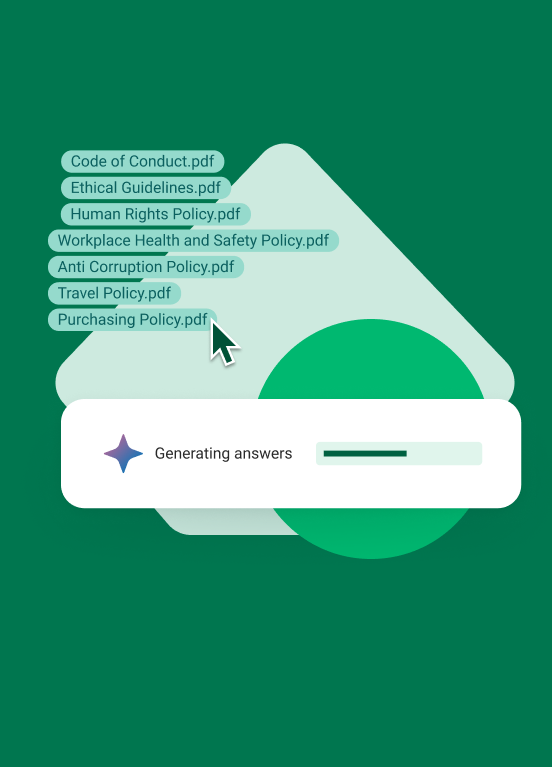
You can import or sync virtually any type of data into the platform — including policy documents, expense records, financial and accounting data, HR data, supplier information, and energy provider data. If it’s relevant to sustainability reporting, we support it. Our team also works closely with you to identify which data sources are most valuable for your reporting needs and the best way to set things up.
Yes, absolutely. With integrations and connected data sources, you can automate the flow of recurring sustainability metrics — enabling real-time data syncing and reducing the need for manual updates. This ensures your ESG data stays current, consistent, and ready for reporting whenever you need it.
Security is a top priority at Position Green. Our integration methods and data transfers are fully secured and adhere to industry-leading standards, including SOC 2 compliance. We also follow a comprehensive Data Protection Policy aligned with both the EU GDPR and UK GDPR, ensuring the robust protection of personal and sensitive data at every step. You can trust that your ESG data is handled with the highest level of security and compliance.
Yes, we support integrations with a wide range of emissions accounting and supply chain tools. Whether you’re tracking Scope 1, 2, or 3 emissions or managing supplier data and risk, our platform can connect with your existing systems to streamline data flow, enhance accuracy, and reduce manual effort.
Yes, you can pull data in real time or set up scheduled data deliveries to align with your reporting deadlines. The platform allows flexible configuration so you can define exactly when and how often your data should be fetched and updated — ensuring you’re always working with timely, accurate information when it matters most.